Keynote Speaker
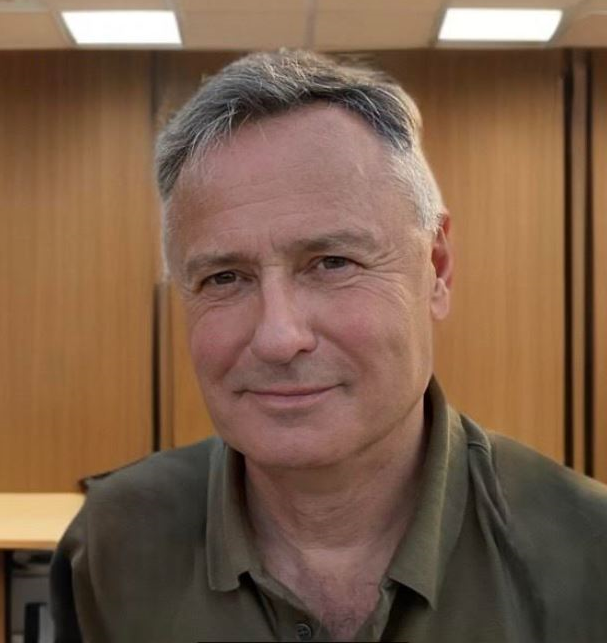
Prof. Henryk Paul
Institute of Metallurgy and Materials Science, Polish Academy of Sciences, Krakow, PolandSpeech Title: Growth of Intermetallic Phases in Explosively Welded Al–Ti and Al–Mg Multilayer Composites
Abstract: Interfacial layers formed during explosive welding are subjected to extremely rapid heating and cooling, which lead to localized melting and mixing within the reaction zones. However, the metallurgical and crystallographic characteristics of these regions, as well as their role in subsequent intermetallic phases growth during post-processing growth, remain insufficiently understood. In this work, the mechanisms governing microstructural evolution and intermetallic phase growth were investigated in two multilayer systems produced by single-shot explosive welding: a fifteen-layer Ti–Al composite consisting of alternating 1 mm sheets of Ti (Gr.1) and AA1050 (Al), and an eleven-layer Mg–Al composite composed of AZ31 (Mg) and AA1050 (Al) sheets. Post-weld annealing was carried out at 903 K for the Ti–Al system and 673 K for the Mg–Al system for times ranging from less than 1 h to more than 10³ h. Interfacial microstructures were characterized by scanning and transmission electron microscopy, complemented by synchrotron X-ray diffraction, while local mechanical properties were evaluated by microhardness and shear-strength measurements.
Explosive welding produced solidified melt regions along all interfaces in both systems. These regions consisted predominantly of non-equilibrium phases with ultrafine-grained or amorphous structures. Short annealing treatments promoted rapid formation of intermetallic layers through the transformation of these metastable products. In the Ti–Al system, a continuous Al₃Ti layer developed at all interfaces, and prolonged annealing led to the formation of a Ti–Al₃Ti–Al multilayer architecture with residual Ti and Al layers. In the Mg–Al system, short-duration annealing (<1 h) at 673 K promoted significant growth of the γ-Mg17Al12 and β-Mg28Al45 phases near all interfaces and induced transformation of the pre-existing non-equilibrium phases within the reaction regions into the β phase. Prolonged annealing (≥500 h) resulted in the formation of intermediate ε-Mg₂₃Al₃₀ layers between the β and γ layers, giving rise to an Al–γ/ε/β–Mg multilayer intermetallic structure. In both composites, the intermetallic layers exhibited pronounced morphological and crystallographic heterogeneity. In the Ti–Al system, this heterogeneity was associated with the formation of Al₃Ti-based superstructures alongside the conventional D0₂₂-Al₃Ti phase, as well as with the development of distinct fibre textures in the interfacial regions. In the Al–Mg system, the β and γ phase layers consisted of highly elongated grains, whereas the ε phase was composed of equiaxed grains. However, none of these phases exhibited a preferred crystallographic orientation.
Biography: Professor Henryk Paul received his Doctor of Engineering degree from the Institute of Metallurgy and Materials Science (IMMS) at the Polish Academy of Sciences in Kraków, Poland, in 1989. After serving as an assistant professor, he was promoted to associate professor in 2003 and to full professor in 2010, all at IMMS PAS. He has completed numerous fellowships and internships at French institutions, including an extended stays at the École des Mines de Saint-Étienne and several study visits to LLB Saclay and Université Paris-Sud. He has authored over 290 original papers, 22 book chapters, and 22 review papers on various aspects of phase transformations. His research interests include explosive welding technology, the formation of plastic flow instabilities during the semi-static and high strain rate deformation of metallic materials, recovery and recrystallization phenomena associated with the phase transformations. He has been a plenary, keynote, or invited speaker at 50 international conferences. He has supervised several PhD students and post-doctoral researchers and has been actively involved in teaching graduate and doctoral courses in physical metallurgy and advanced engineering materials. His publications have been cited over 2,600 times, and he has an h-index of 31.