Keynote Speaker
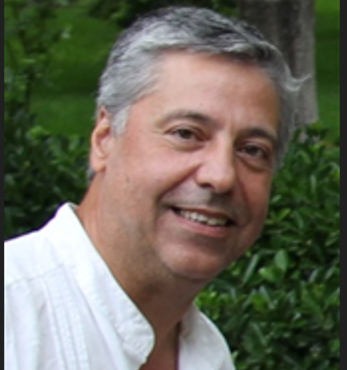
Prof. Jorge Ambrosio
IDMEC, Instituto Superior Técnico, University of Lisbon, PortugalSpeech Title: A Computational Tool to Identify the Impact of New Materials and Joining Processes in the Dynamics of a Road Vehicle
Abstract: The Body-in-White (BiW) is the backbone for the structural integrity of road vehicles, connecting the wheels via the suspension, to carry engine and passengers. The use of new materials and structural joints in the BiW requires to understand how its construction affects the vehicle dynamic behaviour. The finite element (FE) method allows to develop models to study the static structural deformation, vibration characteristics of components, and crash scenarios. However, these models tend to oversimplify the tire-road interaction and the suspension elements, being often used to study the BiW alone, but not for vehicle handling and ride. Flexible multibody (FMB) simulations allow considering the tire-road contact, the suspension systems, and to include the structural flexibility of components, being suitable to study how BiW construction affects the vehicle dynamics. Although the effect of the structural flexibility of the BiW in vehicle dynamics has been studied, most of the works consider simple tubular chassis structures, or, when more complex BiW constructions, the FMB models resort to some kind of simplification of the structure. Additionally, there is no consensus about the relevance of using the BiW flexibility in multibody simulations of road vehicles or on the effect of the BiW stiffness in their ride and handling behaviour. This work extends the understanding on the topic by: incorporating a detailed BiW model in the FMB model of a luxury sports car; discussing the FMB formulation used in the in-house code MUBODyn, and; exploring the impact of BiW design in vehicle dynamics including the use of novel materials and the required joining processes.
Keywords: Automotive structures, New Material, Joining Process, Vehicle Dynamics
Acknowledgements: The authors acknowledge Fundação para a Ciência e a Tecnologia (FCT) for its financial support via LAETA (project https://doi.org/10.54499/UID/50022/2025)
Biography: Prof. Jorge A.C. Ambrósio, having received his Ph.D. degree from the University of Arizona in 1991, he is currently Full Professor and head of the Structural and Computational Mechanics group at the Mechanical Engineering Department of Instituto Superior Técnico at the University of Lisbon, Portugal. He is the author of more than 300 publications, including several books and a large number of papers in international journals in the areas of Multibody Dynamics, Flexible Multibody Dynamics, Structural Mechanics, Vehicle Dynamics, Crashworthiness and Biomechanics. His current SCOPUS h-index is 53 with more than 8000 citations. He has been the responsible of several national and international projects in railway dynamics, biomechanics and passive safety. Currently he is the Editor-in-Chief of Multibody System Dynamics and member of the editorial boards of several international journals.